
This month, I had to make the difficult decision to give up on trying to recover work and files that were on my corrupted hard drive. Although I did recover over 4000 files, they were corrupted and renamed. That meant I would have to go through every file, open and read them to try to locate the files I wanted. Even if I did find what I was looking for, there is no guarantee the files would open correctly consistently or that the files would need to be edited.
So I broke down and decided to save the time and frustration of going through the corrupted files and decided to put in the work of editing and updating the older versions of the files I was looking for. I could easily download uncorrupted versions of my book and screenplays from the cloud or backup locations on my work computer.
I originally dreaded doing this because it meant going back through the professionally edited manuscript of my book and accepting or rejecting the changes the editor made using the track changes feature.
Due to my brain injury, I have a lot of eyesight problems that make looking for the colored changes difficult and even painful for me. I dreaded the possibility of sitting down at my computer and straining to look at each of the changes in the edited document.
But if I wanted to get my book and screenplays back, that meant I had to put in the work. If we want to achieve anything in life, we must “Put in the work.”
Putting in the Work
After my accident, I first learned what it meant to “Put in the work.” I wanted to give up because re-learning the basics of life was difficult and depressing for me. I felt helpless and hopeless due to my disability.
While in rehab, I had to have a talk with my neuropsychologist about putting in the work to recover from my injuries. Her advice still helps me today:
“Slow down, listen, and adjust to my new normal.”
That is a mindset I needed to help me put in the work necessary to rehab my injuries.
Alcoholics and drug addicts must put in the work to stay clean and healthy. Likewise, in life, we each must put in the work necessary to stay healthy, active, and productive.
The principle also applies to fitness routines because they require commitment and energy to get or stay healthy. Putting in the work means committing to the process to get the results we want or need.
After my accident, I didn’t feel like I could accomplish anything, so I had to choose between putting in the work or listening to my feelings. Our feelings are temporary and can hinder us from long-lasting results and life change. The same mindset applies to other areas of life, including the writing life.
The Writing Life
Most of us know that there are no guarantees in the publishing industry, and no one knows if a writer will see the fruits of their hard work and talent. One thing that is certain is nothing will happen if we don’t put in the work to be a writer.
Years ago, a writing mentor of mine stated,
“Dreamers dream about writing, writers write.”
If you want to make it as a writer, you are going to have to put in the work to achieve publication.
Another one of my writing mentors, screenwriter Scott Myers, advises, “Write every day, even when you don’t feel like it.” Writing every day programs our mind and bodies to write, but that is only one part of putting in the work as a writer.
Below are a few more pieces I found in a search of the Internet:
- Consistent practice and discipline.
- Hone the craft.
- Be professional
- Network
- Seek feedback about your writing.
Just like with the recovery process, we all need help on our writing journey from others who know what it takes to succeed. That’s why it is beneficial to find a writing mentor. It is also a good idea to join a local critique group.
If you understand the need for a personal trainer, you understand the need to have someone come alongside you on your writing journey to help you stick to the process and not give up when the going gets tough.
Quitters Don’t Work
After my accident, I had to go to a transitional living center when I left the rehabilitation hospital. A transitional living center (TLC) helps disabled persons test how they will function in a living environment outside of the hospital.
While there, there are nurses and specialized caretakers to monitor and assist clients when needed. They also give clients advice and encouragement to do better at living with a disability.
At this point in the recovery, people either break through or fall through the cracks, dealing with the struggles of recovering from a brain injury:
- Depression
- Anger
- Anxiety
- Apathy
Apathy or Avolition is when we lack the motivation or desire to continue on the path we are on. Apathy occurs when the struggles of the recovery journey become too much for us to continue. When we lose our motivation in anything, we are likely to quit the process altogether.
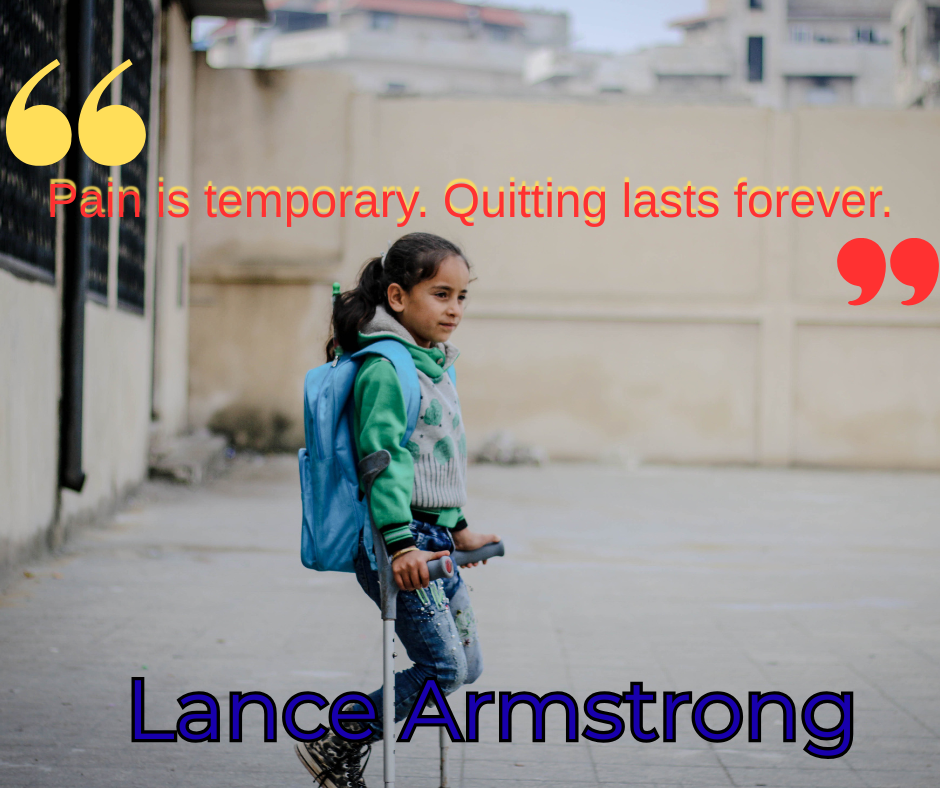
Growing up, I have always heard that “Quitters never win and winners never quit.” The antidote for apathy is committing to putting in the work!

Martin Johnson survived a severe car accident with a (T.B.I.) Traumatic brain injury which left him legally blind and partially paralyzed on the left side. He is an award-winning Christian screenwriter who has recently finished his first Christian nonfiction book. Martin has spent the last nine years volunteering as an ambassador and promoter for Promise Keepers ministries. While speaking to local men’s ministries he shares his testimony. He explains The Jesus Paradigm and how following Jesus changes what matters most in our lives. Martin lives in a Georgia and connects with readers at MartinThomasJohnson.com and on Twitter at mtjohnson51.


No Comments