

After I finished the final draft of my third novel, The Weight of Dreams, I put it aside for a time and recently decided to edit it. The last time I really worked on this contemporary young adult, I was knee-deep in craft books, reading all I could to improve my writing, and trying hard to put my newly acquired knowledge into practice.
One of the skills I was attempting at the time was “show, don’t tell.” What I ended up with was an inordinate amount of body movements to indicate emotion.
As writers, we’ve all heard the advice to show. We want our readers to feel what our characters feel, to experience their struggles, and to connect with them on a deeper level. This is especially important when writing young adult fiction, where emotions can run high and characters are in the stage of discovering who they are and what they believe. But sometimes, in the effort to show emotion, writers can fall into a trap of relying so heavily on physical reactions that characters start to feel more like a collection of gestures than real people.
A clenched jaw, a raised eyebrow, trembling hands, a racing heart, or a tight throat can all be effective ways to convey emotion. The problem comes when these gestures are used automatically, as if every feeling needs a physical signal. This can happen when writers try to avoid telling the reader what a character feels. This is the trap I fell into.
I wanted to make the scene vivid, and physical reactions seemed the way to accomplish that. But when every moment of anger comes with clenched fists and every moment of sadness brings tears or a trembling lip, the prose becomes repetitive. And boy, did I repeat a lot of phrases in my manuscript.
Worse, different characters reacted in the same ways when they should have distinct personalities, experiences, and ways of handling their emotions. Has this pitfall been a problem for you?
How to Master Effective Showing
Start by asking what makes this particular character’s emotional response unique. Two teenagers might both feel betrayed by a friend, but they won’t necessarily respond alike. One might lash out, while another makes a joke to hide the hurt, and a third character might withdraw and ruminate about whether the friendship was ever really genuine.
When I’m reading an engaging story, these types of responses help me understand the character more and make them more interesting.
Jaws tightening, hands curling into fists, and heat rising in the chest all indicate anger, but not much else. That’s not to say physical reactions don’t have their place, but a specific action—such as a teen tearing a letter into tiny pieces and shoving it to the bottom of a trash can—reveals a bit more. Digging it out later and saving it (or burning it!) take the emotion to the next level. Alas, from my experience, these types of descriptions are not always easy to come up with when faced with editing a manuscript.
A simple statement such as “She was so mad she wanted to scream at the sky” or just “She was angry.” Or maybe, if my character is hiding behind her fear, I may have to spell it out and just explain what’s going on.
Going Deeper
Look for opportunities to explore the deeper dimensions of a character’s emotional and spiritual lives. A young person struggling with guilt might hide behind humor, rationalize a poor choice, confess the truth, or wrestle privately with whether God could forgive them. A character experiencing doubt might avoid prayer, search Scripture for answers, or cling to a familiar routine while feeling spiritually unsettled. Use the character’s choices, thoughts, silences, and relationships to communicate the struggle.
Where to Start
One practical way to check a manuscript is to look for repeated physical reactions. Search for words and phrases such as sighed, shrugged, frowned, raised an eyebrow (or just eyes, my current challenge for my current round of editing), clenched his jaw, and bit her lip. These actions aren’t wrong, and every use doesn’t need to be completely removed. Instead of cutting them all right away, look at the surrounding scenes. Are several characters reacting in the same way? Does the gesture add something meaningful, or does it merely repeat an emotion the dialogue and context already convey? If it were removed, would the reader still understand the moment? If so, it may not be needed.
During revisions, look for opportunities to vary how emotion comes across. It can be shown through a physical action, but there are other techniques in an author’s toolbox to convey the emotion as well: characters’ thoughts or interpretation of an event, dialogue, a decision, a moment of avoidance, or an unadorned statement.
As with many things, balance is key. I must confess that when editing, I often have trouble finding that balance, but hope I’m getting better. And in the end, I do my best to create characters who feel real, struggle in ways teens can recognize, and give my readers stories that resonate with them. And hopefully stay with them long after they’ve turned the last page.

Donna Jo Stone is an award-winning, multi-genre author. She writes contemporary young adult, historical fiction, and southern fiction. Many of her novels are about tough issues, but she always ends her stories on a note of hope. Finding the faith to carry on through hard battles in a common theme in Donna Jo’s books. Her novel When the Wildflowers Bloom Again is a 2025 ACFW Carol Award Winner.
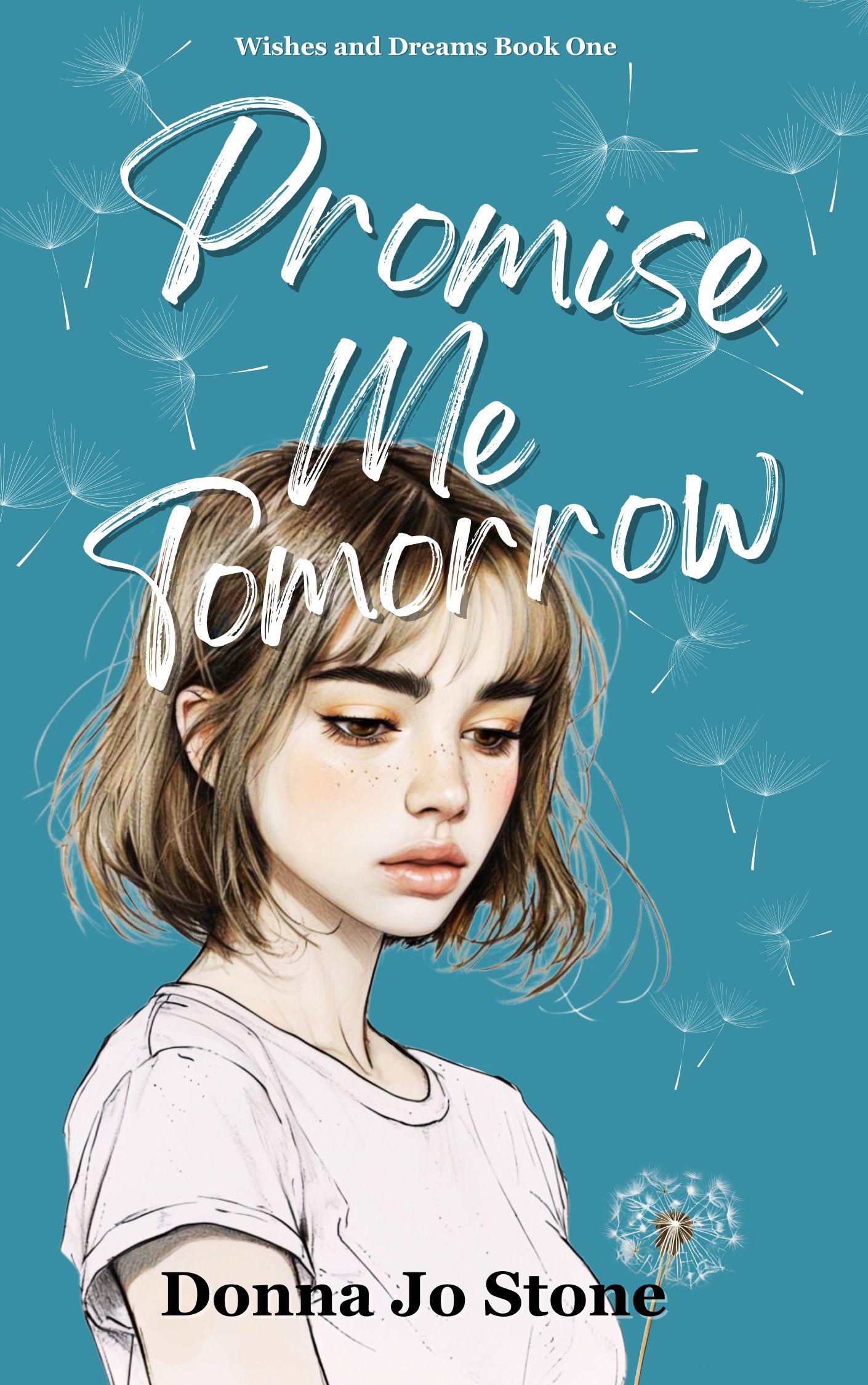
Her contemporary young adult novel and 2025 SCWC Notable Book, Promise Me Tomorrow, is available in ebook, print, and KU. For the latest news on upcoming releases and other author news, sign up for Donna Jo’s newsletter at donnajostone.com.

No Comments